$ docker run -d \
  --name=wireui \
  -e WG_HOST=🚨YOUR_SERVER_IP \
  -e PASSWORD=🚨YOUR_ADMIN_PASSWORD \
  -v ~/.wireui:/etc/wireguard \
  -p 51820:51820/udp \
  -p 51821:51821/tcp \
  --cap-add=NET_ADMIN \
  --cap-add=SYS_MODULE \
  --sysctl="net.ipv4.conf.all.src_valid_mark=1" \
  --sysctl="net.ipv4.ip_forward=1" \
  --restart unless-stopped \
  gyarbij/wireui
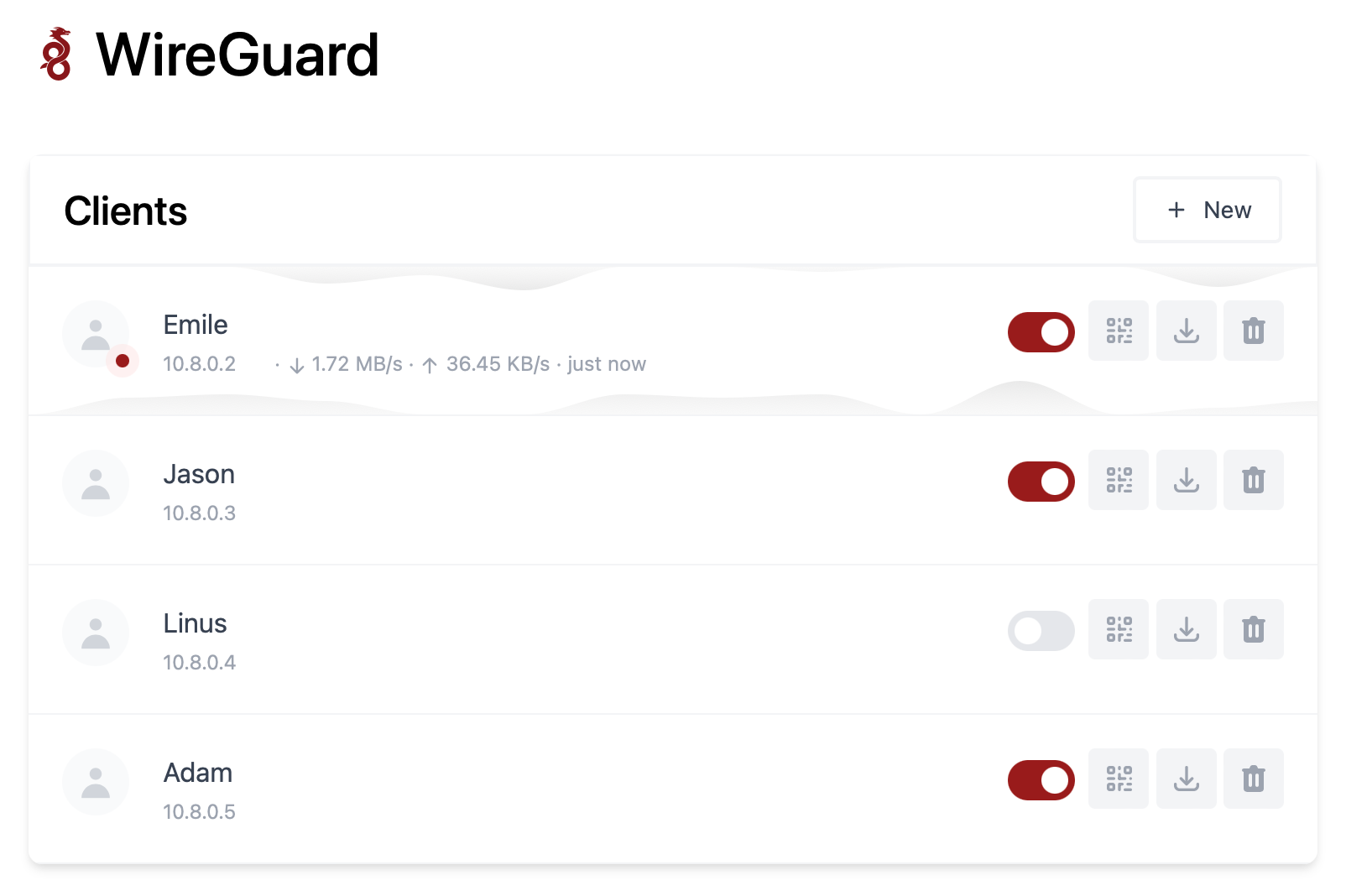
> 💡 Replace `YOUR_SERVER_IP` with your WAN IP, or a Dynamic DNS hostname. > > 💡 Replace `YOUR_ADMIN_PASSWORD` with a password to log in on the Web UI. The Web UI will now be available on `http://0.0.0.0:51821`. > 💡 Your configuration files will be saved in `~/.wireui` ## Options These options can be configured by setting environment variables using `-e KEY="VALUE"` in the `docker run` command. | Env | Default | Example | Description | | - | - | - | - | | `PASSWORD` | - | `ChangeMe@69` | When set, requires a password when logging in to the Web UI. | | `WG_HOST` | - | `vpn.example.com` | The public hostname of your VPN server. | | `WG_PORT` | `51820` | `12345` | The public UDP port of your VPN server. WireGuard will always listen on `51820` inside the Docker container. | | `WG_MTU` | `null` | `1420` | The MTU the clients will use. Server uses default WG MTU. | | `WG_PERSISTENT_KEEPALIVE` | `0` | `25` | Value in seconds to keep the "connection" open. | | `WG_DEFAULT_ADDRESS` | `10.8.0.x` | `10.6.0.x` | Client's IP address range. | | `WG_DEFAULT_DNS` | `1.1.1.1` | `8.8.8.8, 8.8.4.4` | DNS server clients will use. | | `WG_ALLOWED_IPS` | `0.0.0.0/0, ::/0` | `192.420.69.0/24, 10.0.1.0/24` | Allowed IPs clients will use. | | `WG_PRE_UP` | `...` | - | See [config.js](https://github.com/Gyarbij/wireui/blob/master/src/config.js#L19) for the default value. | | `WG_POST_UP` | `...` | `iptables ...` | See [config.js](https://github.com/Gyarbij/wireui/blob/master/src/config.js#L20) for the default value. | | `WG_PRE_DOWN` | `...` | - | See [config.js](https://github.com/Gyarbij/wireui/blob/master/src/config.js#L27) for the default value. | | `WG_POST_DOWN` | `...` | `iptables ...` | See [config.js](https://github.com/Gyarbij/wireui/blob/master/src/config.js#L28) for the default value. | > If you change `WG_PORT`, make sure to also change the exposed port. ## Updating To update to the latest version, simply run: ```bash docker stop wireui docker rm wireui docker pull gyarbij/wireui ``` And then run the `docker run -d \ ...` command above again. ## Common Use Cases * [Using WireGuard-Easy with Pi-Hole](https://github.com/WeeJeWel/wg-easy/wiki/Using-WireGuard-Easy-with-Pi-Hole) * [Using WireGuard-Easy with nginx/SSL](https://github.com/WeeJeWel/wg-easy/wiki/Using-WireGuard-Easy-with-nginx-SSL)